Saturday, 17 November 2012

Into the Outback

We love the outback and it was great to get back to "Red Dirt Country".  The days now are hot - just what we expected as it's nearing summertime.  The caravan is very well insulated and our air-conditioner is not being used.  We'll have to try it soon to make sure it still works.

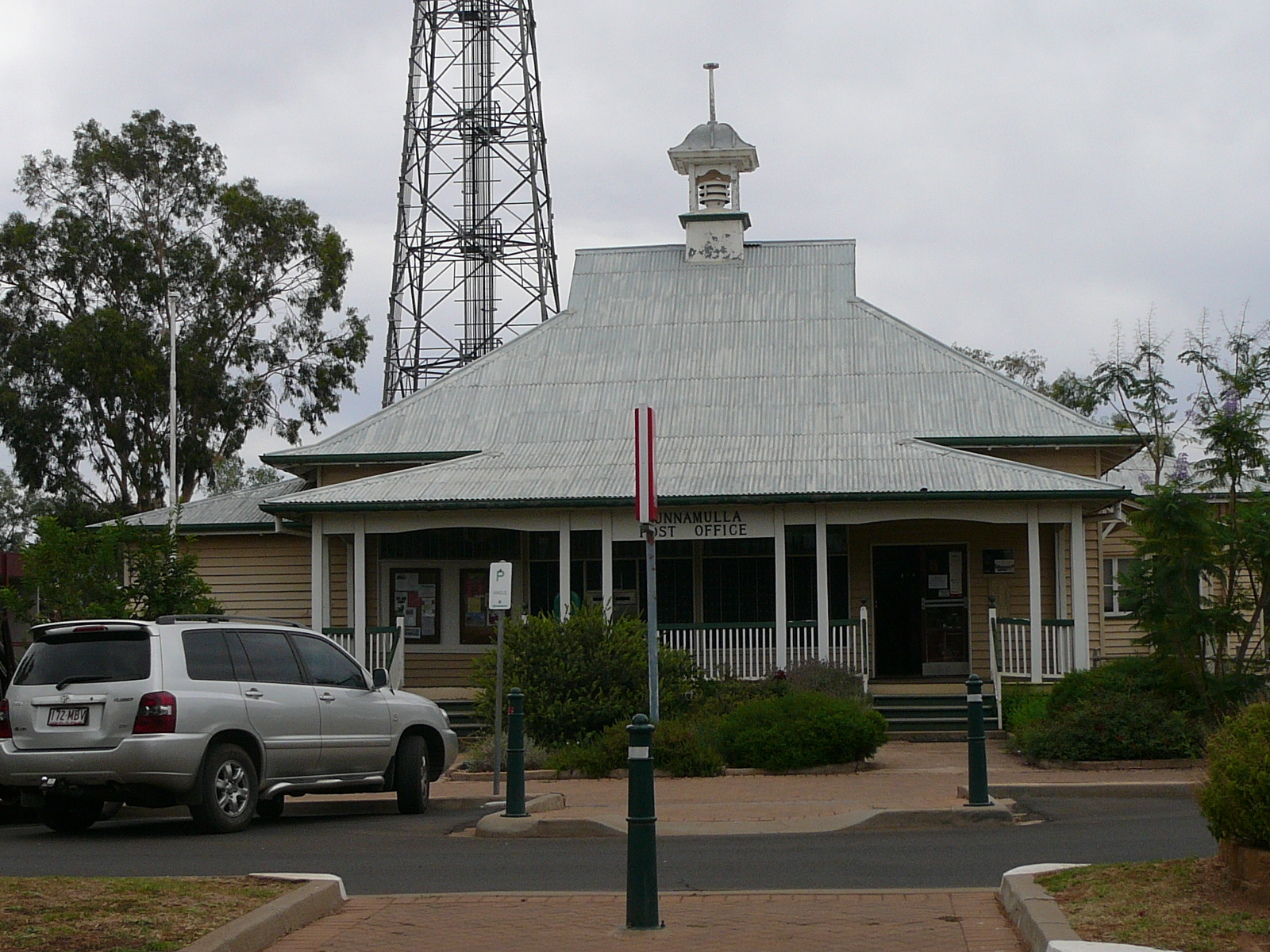
A couple of hours after we leave Bollon we arrive in Cunnamulla, nearly 200kms away.The information centre is very good and they have an excellent video about the Great Artesian Basin which covers about 1/4 of the area of Australia - that's REALLY BIG!  The sinking of bores into this vast underground water supply has provided vital water to many areas of the inland.  Capping of wells and piping water instead of using open channels assists with water pressure and sustainability of supply.  
We wander through the museum which has good displays of memorabilia from the area.  We read that Joseph Wells (not a relative that we know of) robbed the bank in 1880 and hid in a tree until his capture.  He was the last person hanged in Queensland for robbery.  There's also a "time tunnel" of the Great Artesian Basin and an Art Gallery with metal sculptures of birds and animals.  The information centre, museum and art gallery are housed at the Cunnamulla Fella Centre, the building being the first secondary school built in Western Queensland in 1885.

A walk around the town takes us past the "Cunamulla Fella" a  bronze statue inspired by the Slim Dusty song, words by Stan Coster.  Across the road in the rose garden and rotunda.  


The post office was built in 1890 and is located where the Cobb & Co stockyards once stood.  The white Memorial Fountain, completed in 1919, is dedicated to those who died at Gallipoli in World War I and also to the more than 300 men and women from the area who enlisted.


After Lunch we're back into the car for the short drive to Eulo where we're planning to stay the night camped next to the Paroo River.  Eulo is a small town with a pub, patchwork and leatherwork shop and an art gallery.  Worth a stop for a beer and chat to the locals.  We were very impressed with the artwork in the gallery and wished we had walls in the caravan to hang some.  The free campsite was great, flat with views over the river.  We've seen lots of emus today - mostly family groups of dad with the chicks.

In the morning we left early for the 80km drive to Yowah where we're spending a few days.  We're off the road train route now so there aren't so many dead kangaroos and emus on the road.  We do see a few wedge tailed eagles and several goannas and echidnas.  It's really like driving through a garden, the countryside is so beautiful.  The weather has been kind this year so there's plenty of grass and new growth on the trees.  We had planned to spend just one night here but the friendliness of the locals persuaded us to stay for 3.  Georgina and Colin from the caravan park have made us feel very welcome.  Yowah is famous for opals, Australia's national gemstone and there are fossicking fields near the town.  We're staying at the Artesian Waters Caravan Park and have a powered site so we're using the air-conditioner and cycling our batteries.  The town bore has plenty of water for hot showers - it's 57C so has to cool down before it can be used. Yowah also has ample free camping sites.  There is a busy tourist season in the cooler months with the highlight being the 3 day Opal Festival in July when the permanent population of 70 is boosted to over 1,000.


We've driven to The Bluff which is the local vantage point about 4kms from town.  The views are spectacular and the land seems to go on forever.  Someone recently built a labyrinth from stones at the top so we walked it to get some "inner peace".

Friday, 16 November 2012

Westward Ho....

 We waved goodbye to Broadwater Lake and its abundant birdlife and hit the Moonie Highway on our journey into south-west Queensland.  Along the way we saw patches of prickly pear in flower.  This pesky cactus seems to be mostly under control with only isolated patches of the plants.  We turned off the highway and stopped at Tara  after travelling about 80 km for morning tea.

Our next stop was Meandarra which is a small town with plenty to see.  We saw the statue of "Me and Darra" and then wandered next door to the Anzac Memorial Museum.  This museum was well worth the visit and is very professional in its presentations.

There are exhibits covering the army, navy and air force.  There's also a special display which is regularly changed.  It's currently an exhibit about some local members of the air force.


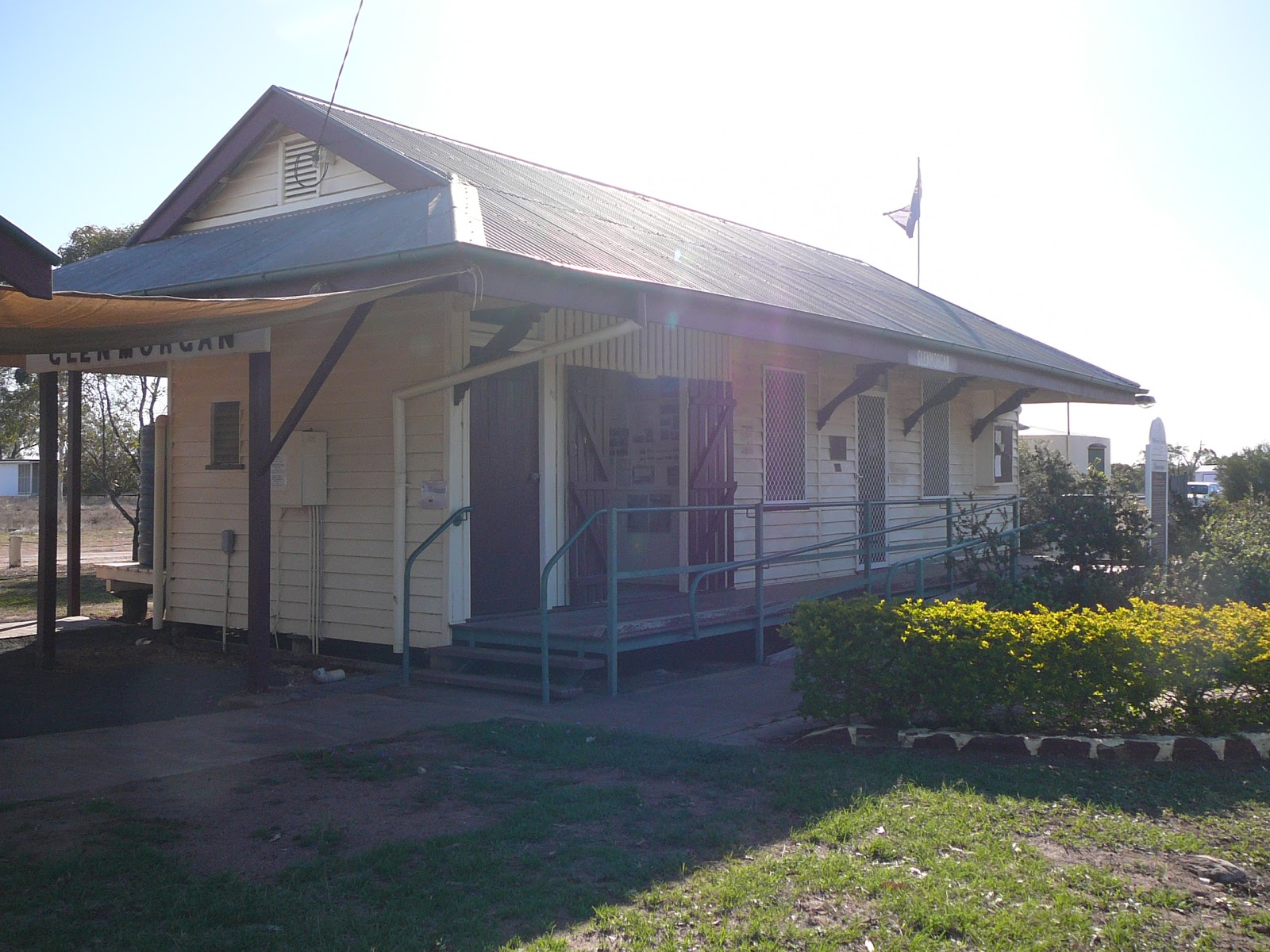
Our destination this day is Glenmorgan, another small town with plenty to see.  Our campsite was at the "End of the Line" which is the relocated old railway station building.  Both Meandarra and Glenmorgan are using their old railway buildings as tourist information centres.  Next to the campsite was a vintage car museum.  "Monty" has all manner of parts available for old cars.  He also has some very well restored cars on display.

 In the morning we drove the few kms to the Myall Creek Botanic Gardens.  This is a world reknown botanic gardens where the popular Robyn Gordon Grevillea was developed.  We drove the 4.5kms circular track and stopped off at some of the little walks along the way.  
The "Enchanted Walk" is marked by painted flagstones illustrating the various features of the gardens.  There are also a number of sculptures along the way.  
The "Thongophone" is a musical instrument played by hitting pipes with rubber thongs.  The large mural at the visitor centre was painted as a collaborative effort by 6 artists using the internet.


We hit the road and our next stop was Surat, 60 kms down the road.  This area is a now major centre for the nearby gas fields.  We were last in Surat in 1976.  We called into the  old Cobb & Co Changing Station to look at the museum which has some very good displays.  There are some great stories about life in this area with a series of exhibits about drilling and water management.  The main feature of the museum is a replica 14 person Cobb & Co coach.  Next door we saw a gallery of fabric art based on a nearby small town.
Once out of Surat we headed south to St George on the Balonne River.  We're into road train country now and we see plenty of these behemoths on the road.  St George has lovely riverside gardens and we easily spent a couple of hours looking at the sights.  The Pilots Memorial and the flood marker are at the gardens.  


One thing on our list here was a visit to The Unique Egg where we saw a display of carved and illuminated emu eggs. Well worth the visit.  Unfortunately the bush tucker garden and museum are suffering from flood damage sustained early in 2012 so we were't able to visit them.  The lady in the Information Centre was very helpful and suggested that we stop off at Bollon on our way west - we take her advice and our next stop is 100km west along the Balonne Highway.


Ballon is another small (pop 130) town with a great sense of community.  There is a good free camp area on the river with flat sites and plenty of good quality water.  It's starting to get hot now with temperatures well into the 30sC.  We have kangaroos coming to the river to drink and several bossy ducks hanging around the camp.  The yabby net we bought in Tara has been put to good use although we are mainly feeding very smart yabbies that eat the bait and escape from the net.  We have managed to catch one large yabby which was delicious with salad.  We have really good mobile and WiFi service here, although no TV which is satellite only.

We got up early on the 14th November to see the solar eclipse - partial here and total in the Cairns area.  Although the sky was clear we weren't able to see much apart from a significant drop in the light for a few minutes.  We  watched the actual eclipse on the internet from Cairns.  Later in the morning we called in to the Heritage Centre which has a big collection of memorabilia from the area.  We have booked into the Nullawokka Aboriginal Tour for the next morning.
At 8am Bill Speedy arrived at our caravan and we set off on a walk through the bush.  We really enjoyed this tour, hearing stories about aboriginal life in the area.  We passed several scar trees and saw plenty of kangaroo and snake tracks.  
We stopped off a traditional gunyah and saw a bowerbird's courting bower before walking back to town for a bush tucker morning tea prepared by Bill's wife, Judith.  Wattleseed coffee, saltbush scones, smoked kangaroo and emu pate were just some of the delicious treats we enjoyed.  This tour is highly recommended.  Bill has been the driving force behind the establishment of the paved riverside walk with its indigenous art panels.


Saturday, 10 November 2012

Broadwater Lake


Our 2 weeks in Toowoomba ended all too quickly and before long we were back in the caravan heading west.

About 1½ hours after we left Toowoomba we pulled into the lakeside campground at Broadwater Lake, about 30 kms from Dalby.  We are staying here for a week.  Facilities here are very good, with hot showers and flat campsites although our WiFi and mobile reception is intermittent.  Everything else is perfect.  The lake is quite shallow, only 3m deep when it’s full.  There is a great variety of wildlife.

Waterbirds and bush birds abound and many people come here for birdwatching.  We are entertained by a pair of swans with their 2 cygnets, cormorants and fleets of pelicans fishing in the lake, sea eagles catching fish “on the wing”, spoonbills and cranes wading in the shallows.  There is a group of about 15 apostle birds that do their rounds a few times each day walking through the camp.  The trees are home to crows, sulphur crested cockatoos, parrots, magpies, and dollar birds as well as kookaburras and kingfishers.  Eastern grey kangaroos and red necked wallabies bound through on their way to drink at the lake.  We’ve also seen goannas and snakes around.  There are plenty of fish in the lake, but we haven’t caught any yet – maybe there’s too much competition from the pelicans.

Nearby Dalby has plenty to see too.  We drove to Bell, about 35kms north of Dalby, to track down some family history and followed up at the Family History base in Dalby where we were successful in tracking down some Vidler information.  Still more work to do there.  At Bell we had morning tea at the Bluebelle Gallery before wandering through the cemetery.  

At Dalby we spent some time at the Pioneer Museum, which has a huge collection of memorabilia from the area housed in many buildings set up like a village.  There’s everything here from sewing machines to a dental surgery to farm machinery, all run by volunteers.  This Museum is well worth a visit as it is not just a collection of stuff and a real effort has been made to display things in context. The Rocks and Fossils collection is a real gem.  There’s enough here to keep a whole class of Museum Studies students busy for several years.

Broadwater Lake is a popular wedding location and there have been weddings here the past 2 weekends.